Unique Capabilities of Our Epoxy Foam
Our proprietary epoxy foam is capable of forming ultra-thin and complex three-dimensional geometries that cannot be achieved with conventional foam cores without secondary machining. Its material properties can be tailored through customized resin formulations and it can be integrally molded with CFRP and other materials, expanding design possibilities across a wide range of applications.
-
 Variable Thickness Molding
- Variable Thickness Molding
-
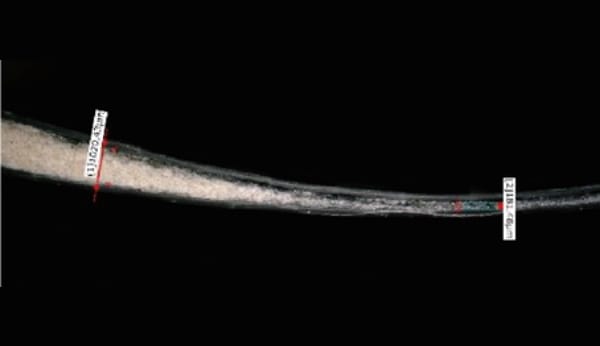
Achieves continuous transitions between thick and ultra-thin sections without secondary machining. Complex geometries with localized thickness variations can be molded directly, enabling greater design flexibility while reducing manufacturing steps.
-
 Complex 3D Molding
- Complex 3D Molding
-
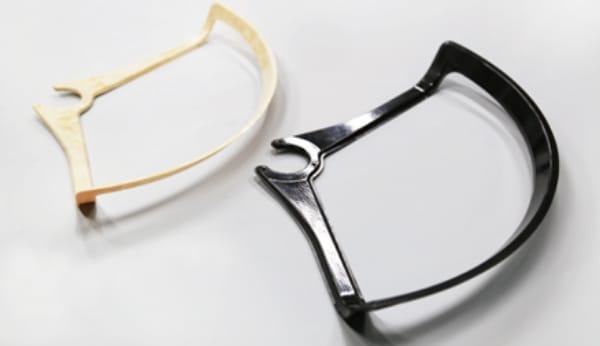
Our proprietary foaming and molding process enables epoxy foam to conform to intricate three-dimensional geometries directly within the mold. This eliminates extensive post-machining, reduces manufacturing costs, and improves production efficiency.
-
 Ultra-Thin Molding
- Ultra-Thin Molding
-
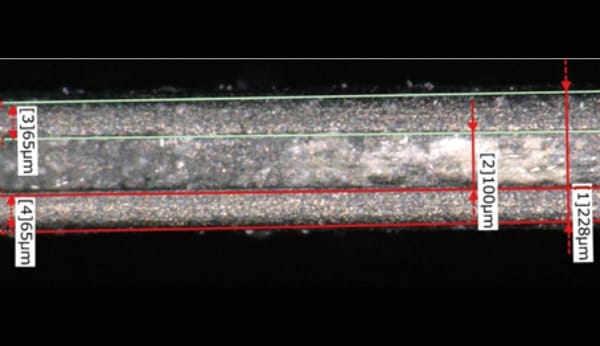
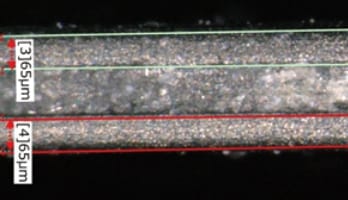
Supports molding from thicknesses of just several tens of micrometers, allowing for lightweight, high-precision components with exceptionally fine geometries.
-
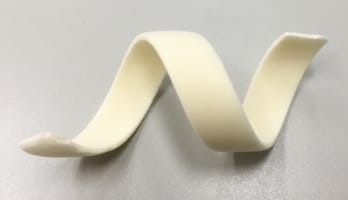 Thermal Formability
- Thermal Formability
-
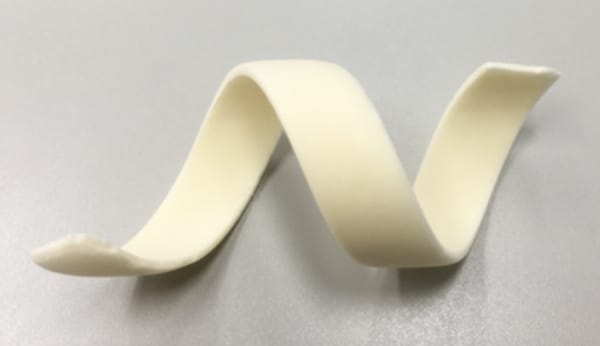
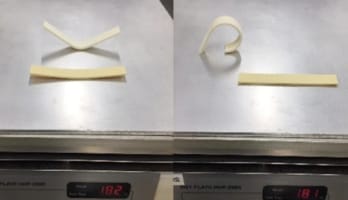
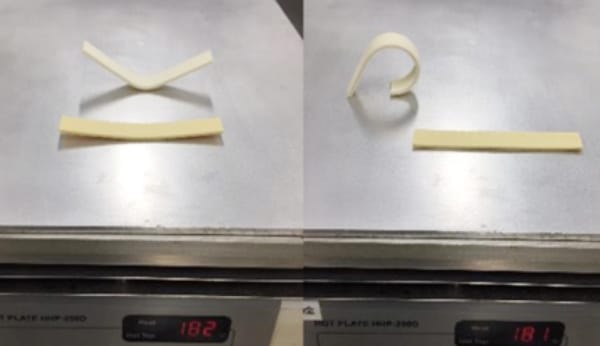
Unlike conventional thermoset foams, our epoxy foam can be thermally reshaped above its glass transition temperature (Tg). Once cooled, the material retains its new geometry, providing greater manufacturing flexibility without sacrificing structural performance.
-
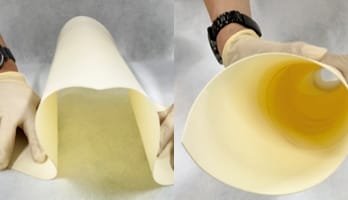 High Flexibility and Recovery
- High Flexibility and Recovery
-
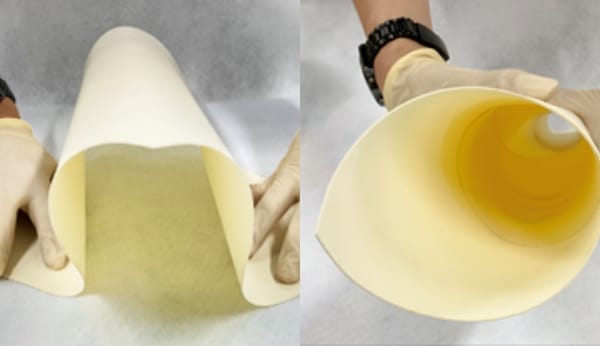
Although classified as a rigid epoxy foam, the material exhibits excellent flexibility and elastic recovery, allowing it to absorb deformation while maintaining its structural integrity.
-
 High Heat Resistance
- High Heat Resistance
-
In addition to the 130°C grade, we also offer a grade of epoxy foam with higher heat resistance specifications of 180°C. Please contact us if you wish to use our epoxy foam in higher temperature environments. Available in both standard 130°C Tg and high-temperature 180°C Tg grades to meet demanding thermal requirements across industrial, automotive, and aerospace applications.
-
 Precision Density Control
- Precision Density Control
-
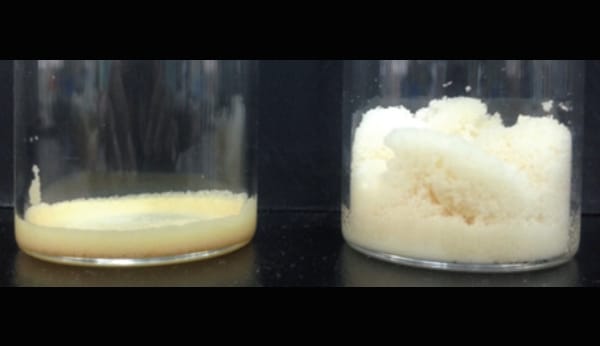
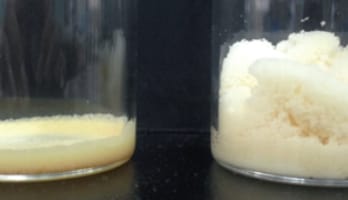
The expansion ratio can be precisely controlled to achieve the desired density, thickness, and mechanical performance.
-
 Custom Material Functionalization
- Custom Material Functionalization
-
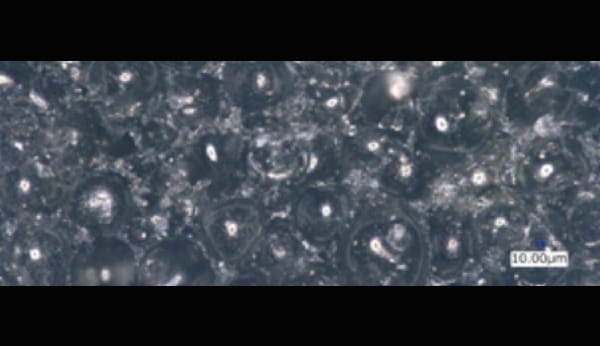
The desired filler can be added at the resin synthesis stage Functional fillers and reinforcing additives can be incorporated during resin formulation to tailor mechanical, thermal, electrical, or other material properties for specific applications.
-
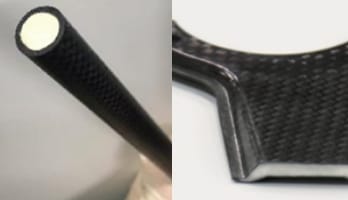 Integrated Molding with CFRP and Other Materials
- Integrated Molding with CFRP and Other Materials
-
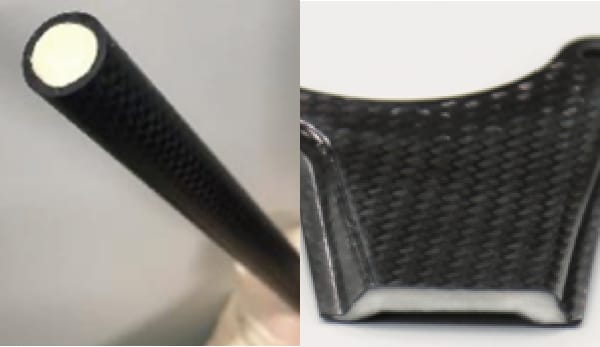
Epoxy foam can be uniformly expanded and molded even within long, narrow structures. The epoxy-based composition of the foam provides excellent compatibility with CFRP, enabling strong adhesion without requiring additional adhesives. It also bonds exceptionally well with metals such as aluminum, making it well suited for lightweight hybrid structures.
Physical Properties of Proprietary Epoxy Foam (Tg = 130°C)
| Unit | 240 kg/m³ | 120 kg/m³ | 60 kg/m³ | |
|---|---|---|---|---|
| Tensile Strength | MPa | 3.5 | 2.1 | 0.6 |
| Young’s Modulus | MPa | 103.4 | 63.4 | 23.7 |
| Elongation | % | 7.4 | 7.7 | 5.0 |
| Compressive Strength | MPa | 3.3 | 1.2 | 0.4 |
| Compressive Modulus | MPa | 120.8 | 53.1 | 28.5 |
*The values shown are representative physical properties of epoxy foam with a glass transition temperature (Tg) of 130°C.
Available Thickness and Expansion Ratios
| Expansion Ratio: 5× | Expansion Ratio: 10× | Expansion Ratio: 20× | |
|---|---|---|---|
| 1 mm Thickness | ✓ | ✓ | Under Development |
| 2 mm Thickness | ✓ | ✓ | ✓ |
- 5× expansion: 240 kg/m³ (0.24 g/cm³)
- 10× expansion: 120 kg/m³ (0.12 g/cm³)
- 20× expansion: 60 kg/m³ (0.06 g/cm³)